Introduction
The global trade in counterfeit and pirated goods reached USD 467 billion in 2021 — 2.3% of total world trade — hitting industries from electronics and automotive to pharmaceuticals. Counterfeit products don't just drain revenue. They trigger safety incidents, warranty fraud, and lasting brand damage.
The scale is striking in healthcare: substandard and falsified medicines alone cost the global economy an estimated USD 30.5 billion annually, with 1 in 10 medicines in low- and middle-income countries being substandard or falsified.
Security labels are one of the most practical, widely deployable tools businesses use to fight back. These specially engineered labels protect products from tampering, authenticate brand legitimacy, and signal quality to consumers at every point in the supply chain — from manufacturer to end buyer.
This article explores the meaning of security labels, their critical role in brand protection, the key types available, and how to choose the right solution for your business.
TLDR:
- Security labels use tamper-evident and anti-counterfeit features to protect products and verify authenticity
- Technologies range from holographic labels to RFID and QR code serialization
- They prevent counterfeiting, preserve warranty integrity, and build consumer trust
- Effective brand protection combines overt features consumers can see with covert elements designed for investigators
- Selection depends on risk level, material type, and traceability needs
What Is a Security Label?
A security label is a specially engineered sticker or label that incorporates tamper-evident, anti-counterfeit, or authentication features designed to protect a product from unauthorized access, tampering, duplication, or theft. Unlike standard product labels, security labels contain physical or digital properties that visibly change or reveal evidence when someone attempts to interfere with them.
Security labels serve two primary goals:
- Making tampering or counterfeiting immediately visible to inspectors, retailers, or consumers through irreversible physical changes
- Providing verifiable proof of product authenticity throughout the supply chain, from manufacturer to end user
Where Security Labels Are Applied
Security labels appear across a broad range of industries:
- Product packaging for pharmaceuticals, food, and consumer goods
- Bolt holes and seams on electronics to prevent unauthorized repairs
- Pharmaceutical boxes to comply with serialization mandates
- Garment tags for luxury fashion and apparel authentication
- Automotive spare parts to prevent counterfeit components from entering the market
- High-value retail goods including electronics, cosmetics, and collectibles
Any business handling products where authenticity or tamper evidence matters — from pharmaceuticals to spare parts — has a clear reason to use them.
Types of Security Labels: A Comprehensive Overview
Security labels are not one-size-fits-all. Different industries and threat levels require different technologies, ranging from visual deterrents to digitally traceable authentication systems. Understanding the available options helps businesses select the right protection layer.
Hologram Security Labels
Hologram labels use multi-layered optical effects—color shifts, 3D patterns, and diffraction—that change appearance with viewing angle. These visual complexities make holograms extremely difficult to replicate without industrial-grade equipment.
Key characteristics:
- Create unique optical signatures using nano-scale elements (up to 600,000 DPI)
- Serve dual purposes: security and brand prestige
- Fully customizable with brand logos and product information
The global holographic labels market was valued at USD 3.48 billion in 2024 and is projected to reach USD 9.10 billion by 2033, growing at a CAGR of 11.3%.
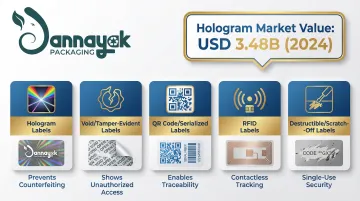
Advanced proprietary holographic labels, such as those developed with IIT Kanpur's Cheko technology by Gannayak Packaging, incorporate customized optical patterns combined with unclonable 3D tactile features. Each seal contains a unique tactile pattern, distinct QR code, and identification number, enabling fingerprint-like authentication verifiable via mobile app.
Void and Tamper-Evident Labels
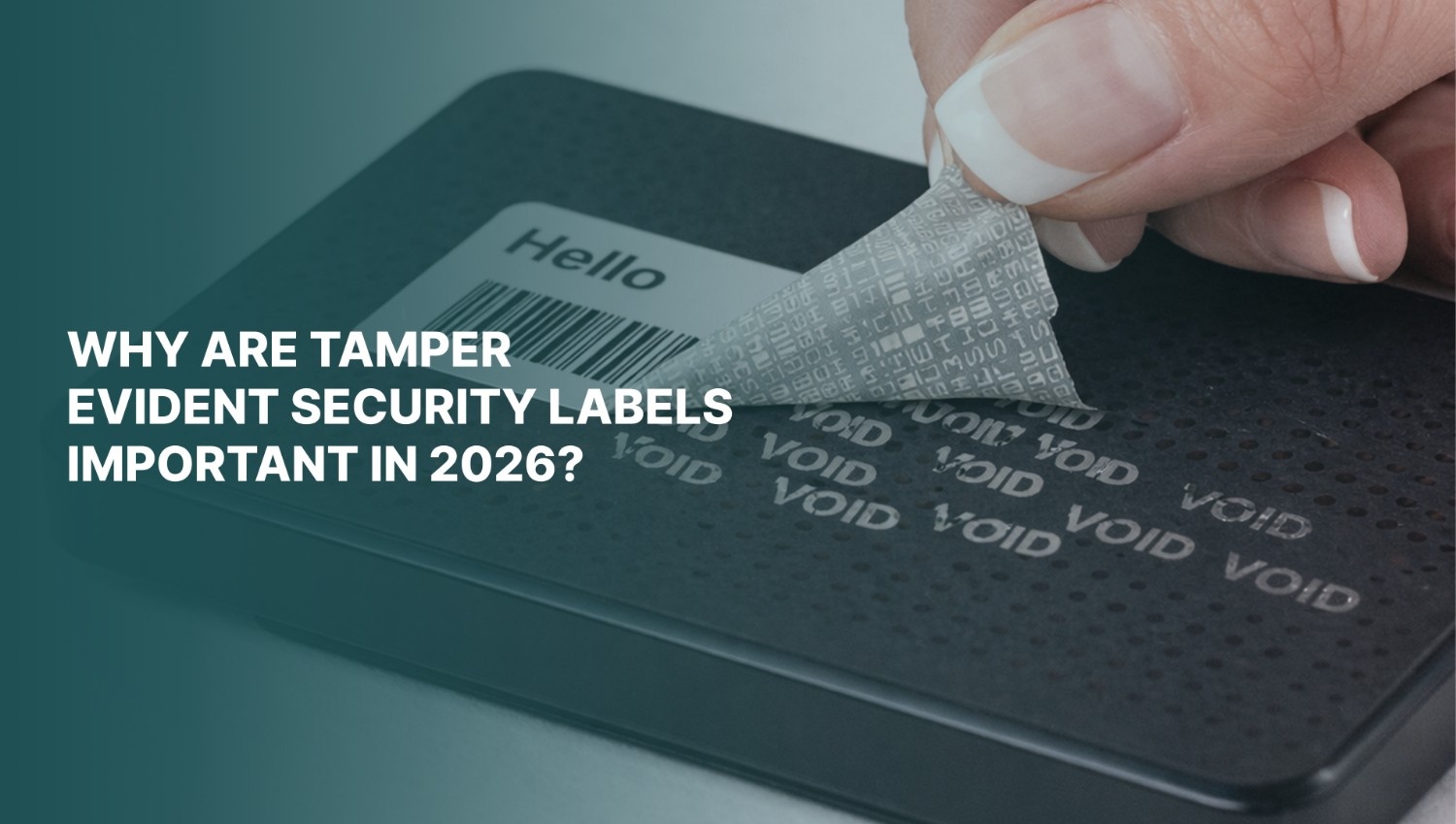
Void labels leave a permanent, irremovable message (commonly "VOID") on the substrate when peeled off, while tamper-evident seals break apart or distort to signal interference.
Two main types:
- Residue labels — Leave permanent marks on the surface, ideal for single-use applications
- No-residue labels — Suited for reusable packaging where substrate damage must be avoided
In the European Union, anti-tampering devices are mandatory safety features for prescription medicines under the Falsified Medicines Directive, ensuring packaging integrity hasn't been compromised.
QR Code and Serialized Labels
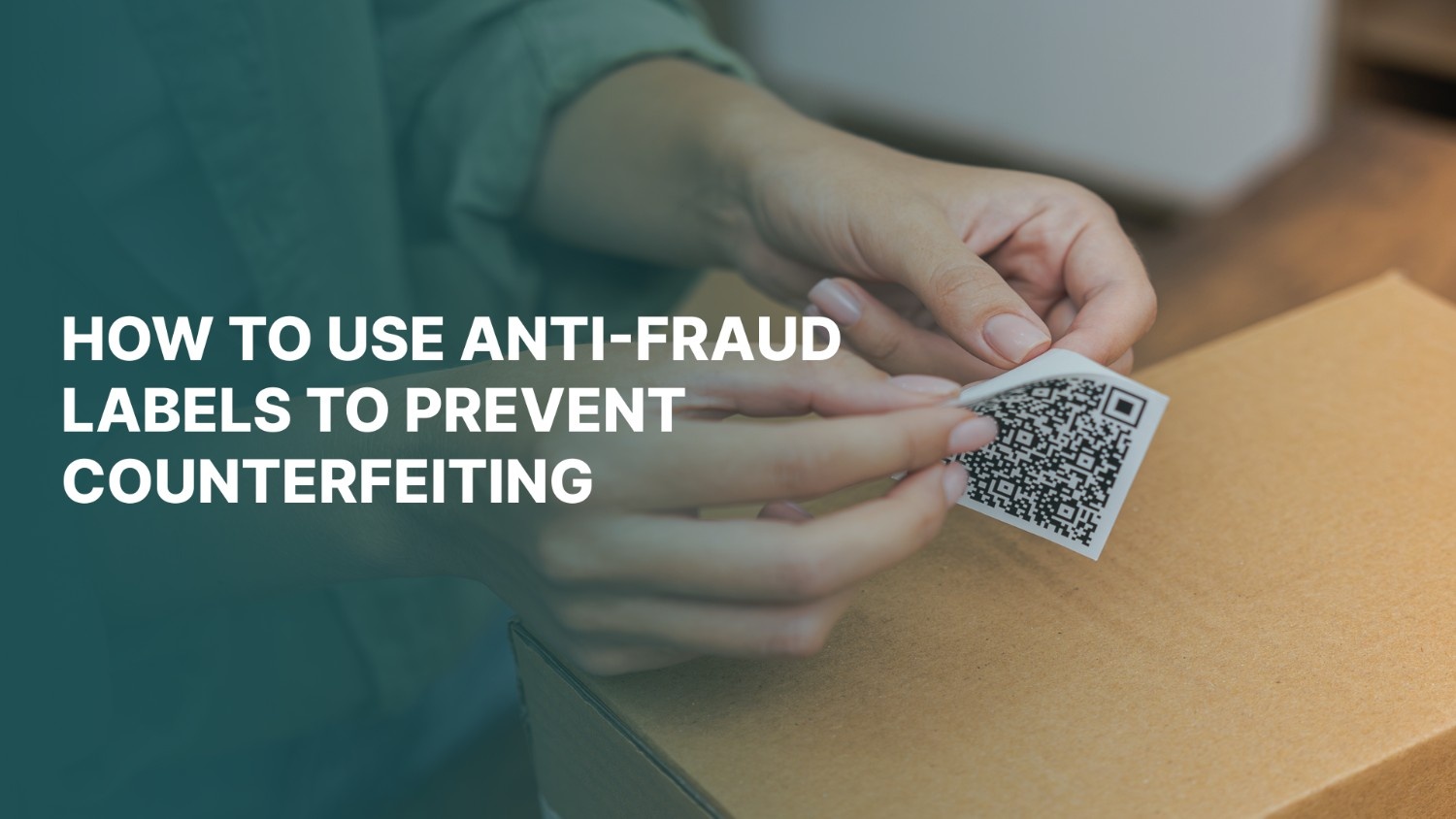
QR code and serialized barcode labels store unique product identifiers that can be scanned by consumers, retailers, or customs authorities to verify authenticity in real time.
Consumer scanning behaviour has shifted significantly:
- 79% of consumers are more likely to purchase products with scannable QR codes
- 62% of consumers are willing to pay a premium for products offering detailed information through digital channels
Combining serialization with track-and-trace systems gives brands full supply chain visibility, enabling them to pinpoint where tampering or product diversion occurs. India's CDSCO now mandates QR codes for top drug brands and APIs, while the US DSCSA and EU FMD require similar serialization for pharmaceuticals.
RFID Labels
RFID (Radio Frequency Identification) labels contain a microchip that stores and transmits product data via radio waves without requiring line-of-sight scanning.
Market growth and adoption:
- RFID market forecast to grow from USD 14.58 billion in 2025 to USD 30.47 billion by 2034
- 52.8 billion RAIN RFID tag chips were shipped globally in 2024, a 17% increase year-over-year
- Major retailers mandate item-level tagging to achieve 99% inventory accuracy
For high-volume logistics, warehousing, and retail operations, RFID labels handle both security authentication and inventory management simultaneously — reducing shrinkage while improving stock accuracy.
Destructible and Scratch-Off Labels
Destructible vinyl labels have ultra-strong adhesive and low tensile strength facestocks that cause them to fragment into tiny pieces upon removal. This makes reuse or transfer impossible, making them well-suited for asset marking in electronics and industrial machinery.
Scratch-off labels hide verification codes under an opaque layer. Consumers or inspectors scratch off the coating to reveal the code, which can then be verified online or via app. These labels work well for consumer authentication programs and promotional campaigns.
How Security Labels Protect Your Brand and Build Consumer Trust
When fake products reach consumers, quality complaints, safety incidents, and negative reviews land on the original brand—not the counterfeiter. Security labels are the first visible barrier that stops that damage before it starts.
Preventing Counterfeit Goods from Entering the Market
Security labels create a technical and visual barrier that counterfeiters find costly and difficult to replicate. When multiple security features are layered together—such as a hologram combined with a serialized QR code—the "cost of forgery" rises steeply. This economic barrier deters most bad actors at the packaging stage, particularly casual counterfeiters who lack sophisticated equipment.
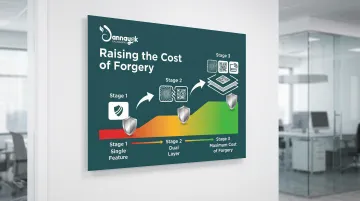
For organized counterfeiting operations, the combination of overt and covert features makes replication technically challenging and increases the risk of detection.
Preserving Warranty and Product Integrity
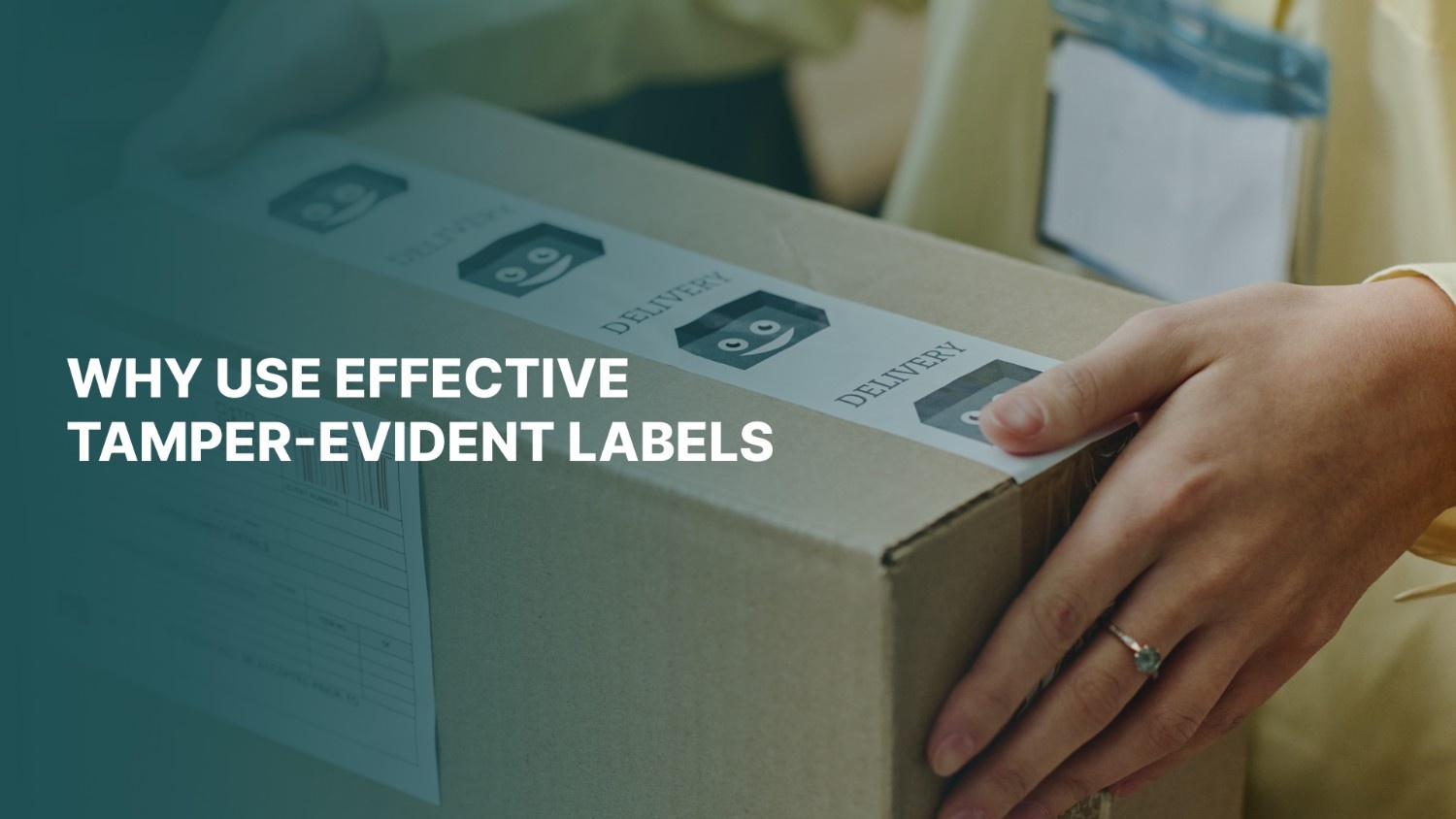
Security labels protect manufacturers from fraudulent warranty claims by sealing bolt holes, seams, or access panels. Any attempt to open the product voids the label visibly, providing clear evidence of tampering.
Tamper-evident sealing delivers measurable protection:
- Deters unauthorized repairs that could compromise product safety
- Protects manufacturers from liability for third-party modifications
- Maintains quality standards throughout the product lifecycle
- Reduces warranty fraud costs
In electronics and automotive sectors, where warranty fraud is common, destructible labels covering screw holes have become the industry standard.
Building Consumer Confidence Through Visible Authenticity
Shoppers who see a hologram sticker, tamper-evident seal, or scannable QR code associate the product with higher quality and trustworthiness. That visible signal of authenticity shapes purchase decisions before a single word of marketing reaches them.
Research shows that 79% of consumers have interacted with products via QR codes, and manufacturers using RFID-enabled security labels can command price premiums of up to 15% in high-value sectors like luxury goods.
In industries like pharmaceuticals, food, and luxury goods, a visible security label directly influences purchase decisions—particularly when consumers are already aware of counterfeiting risks in those categories.
Strengthening Brand Integrity Across the Supply Chain
Security labels maintain chain of custody from manufacturer to end consumer. This matters most in sectors like automotive parts, electronics, and FMCG, where goods pass through multiple distributors, wholesalers, and retailers before reaching buyers.
Track-and-trace capabilities via serial numbers or QR codes allow brands to:
- Monitor product movement through distribution channels
- Identify unauthorized diversion or grey market activity
- Detect tampering at specific supply chain nodes
- Verify authenticity at customs checkpoints
- Provide retailers with authentication tools
This supply chain transparency is increasingly mandated by regulators. India's CDSCO now requires QR codes for APIs and top drug brands—a requirement that reflects a broader global shift, with the EU's Falsified Medicines Directive and US Drug Supply Chain Security Act imposing similar serialization standards.
Overt vs. Covert Security Labels: Choosing Your Defense Layer
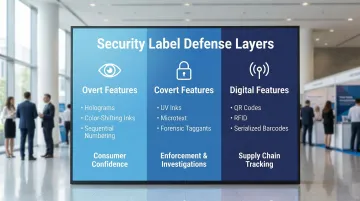
Overt security features are visible to the naked eye—holograms, printed void messages, color-shifting inks—and act as a visible deterrent. They allow immediate verification by consumers and retail staff, building confidence at the point of purchase.
Covert security features are hidden elements—UV-reactive inks, microtext, sub-surface void patterns—that aren't obvious until revealed under specific conditions or tools. These features enable enforcement by trained investigators, customs officials, or brand protection teams.
Strategic Value of Combining Both
Neither feature type works best in isolation. The International Anti-Counterfeiting Coalition advocates for a layered approach—combining multiple technologies so there's no single point of failure.
For industries facing sophisticated counterfeiting—pharmaceuticals, FMCG, automotive parts—combining overt features, covert elements, and digital serialization offers the most reliable protection.
| Feature Type | Examples | Strategic Purpose |
|---|---|---|
| Overt | Holograms, color-shifting inks, sequential numbering | First-line defense; builds consumer confidence |
| Covert | UV-sensitive inks, microtext, forensic taggants | Enables enforcement; validates products in disputes |
| Digital | QR codes, RFID, serialized barcodes | Supply chain tracking; real-time authentication |
How to Choose the Right Security Label for Your Business
Selecting the appropriate security label requires evaluating several key factors:
Critical selection criteria:
- Counterfeiting or tampering risk level in your sector and geographic markets
- Surface and packaging material the label must adhere to (glass, plastic, metal, cardboard)
- Environmental conditions including extreme temperatures, moisture, or rough handling
- Authentication needs — consumer-facing verification vs. supply-chain traceability
The Importance of Customization
A security label printed with your brand's unique logo, serial number, and custom void message deters counterfeiters and reinforces brand identity — generic labels are far easier to replicate.
Custom holographic security labels — such as those produced by Gannayak Packaging through its IIT Kanpur-certified Cheko technology — embed brand-specific optical patterns alongside 3D tactile features. These patterns are independently certified, resistant to replication, and support fingerprint-like authentication verifiable via mobile app.
Customization options include:
- Brand logos and product information
- Unique holographic patterns and optical effects
- Custom void messages and tamper-evident designs
- Serialized QR codes linked to track-and-trace systems
- Industry-specific compliance features
Regular Audits and Updates
Even the best label design loses effectiveness over time as counterfeiters study and replicate older formats. Businesses should audit their security labels regularly — what provided solid protection two years ago may already be compromised today.
The EUIPO notes that for holographic features, any deviation from the original signals a likely counterfeit — which means version control and timely updates are part of your protection strategy. Periodic reviews with your label manufacturer keep your authentication features ahead of replication attempts.
Frequently Asked Questions
What is the meaning of a security label?
A security label is a specially designed sticker or label with tamper-evident or anti-counterfeit features that visibly change or reveal evidence of interference. It helps manufacturers verify product authenticity and protect against counterfeiting or unauthorized access throughout the supply chain.
What are the different types of security labels?
The main types include hologram labels, void/tamper-evident labels, QR code and serialized labels, RFID labels, destructible vinyl labels, and scratch-off labels. Each type offers different protection levels — from basic visual deterrents to digital authentication — suited to the product and industry.
How do security labels help with brand protection?
Security labels protect brands by making counterfeiting difficult and costly to replicate, maintaining supply chain integrity, preventing fraudulent warranty claims, and giving consumers visible proof of authenticity.
What is the difference between overt and covert security labels?
Overt labels have visible security features like holograms or VOID messages that act as a deterrent and allow consumer verification. Covert labels contain hidden features like UV-reactive ink or microtext detectable only with special tools. Many businesses use both together for layered protection against different counterfeiting threats.
Can security labels be customized for my brand?
Yes. Security labels can be customized with brand logos, serial numbers, void messages, QR codes, and proprietary holographic patterns. This makes them harder to replicate while reinforcing brand identity and supporting track-and-trace integration.
Which industries need security labels the most?
Pharmaceuticals, food and beverage, automotive parts, electronics, luxury fashion, and e-commerce are among the industries with the highest need.