Chemical identification labels play a critical role in maintaining safety and compliance across industrial environments where hazardous substances are stored, handled, or transported. From manufacturing plants to warehouses and laboratories, chemicals pose inherent risks that require clear, consistent identification to prevent exposure, mishandling, and operational incidents.
Accurate chemical labeling is not only a regulatory requirement but also an essential part of day-to-day operations, supporting safe handling, emergency response, and audit readiness. Missing or incorrect labels can lead to safety violations, production delays, and compliance penalties.
This blog explains what chemical identification labels are, the regulatory frameworks that govern them, the materials and printing methods that ensure durability, and the key factors businesses should consider when selecting labels for long-term industrial use.
Key Takeaways
Chemical identification labels serve as critical safety infrastructure, supporting hazard communication, compliance, and operational control.
Accurate labeling requires more than regulatory symbols, with material durability, adhesive compatibility, and print method playing a major role.
Environmental factors such as chemical exposure, temperature variation, and surface type are the primary causes of label failure in real-world conditions.
Industry-specific applications demand different labeling solutions, particularly across manufacturing, pharmaceuticals, logistics, and energy operations.
Consistent bulk production and supplier expertise significantly reduce relabeling risk, audit gaps, and long-term safety exposure.
What Are Chemical Identification Labels?
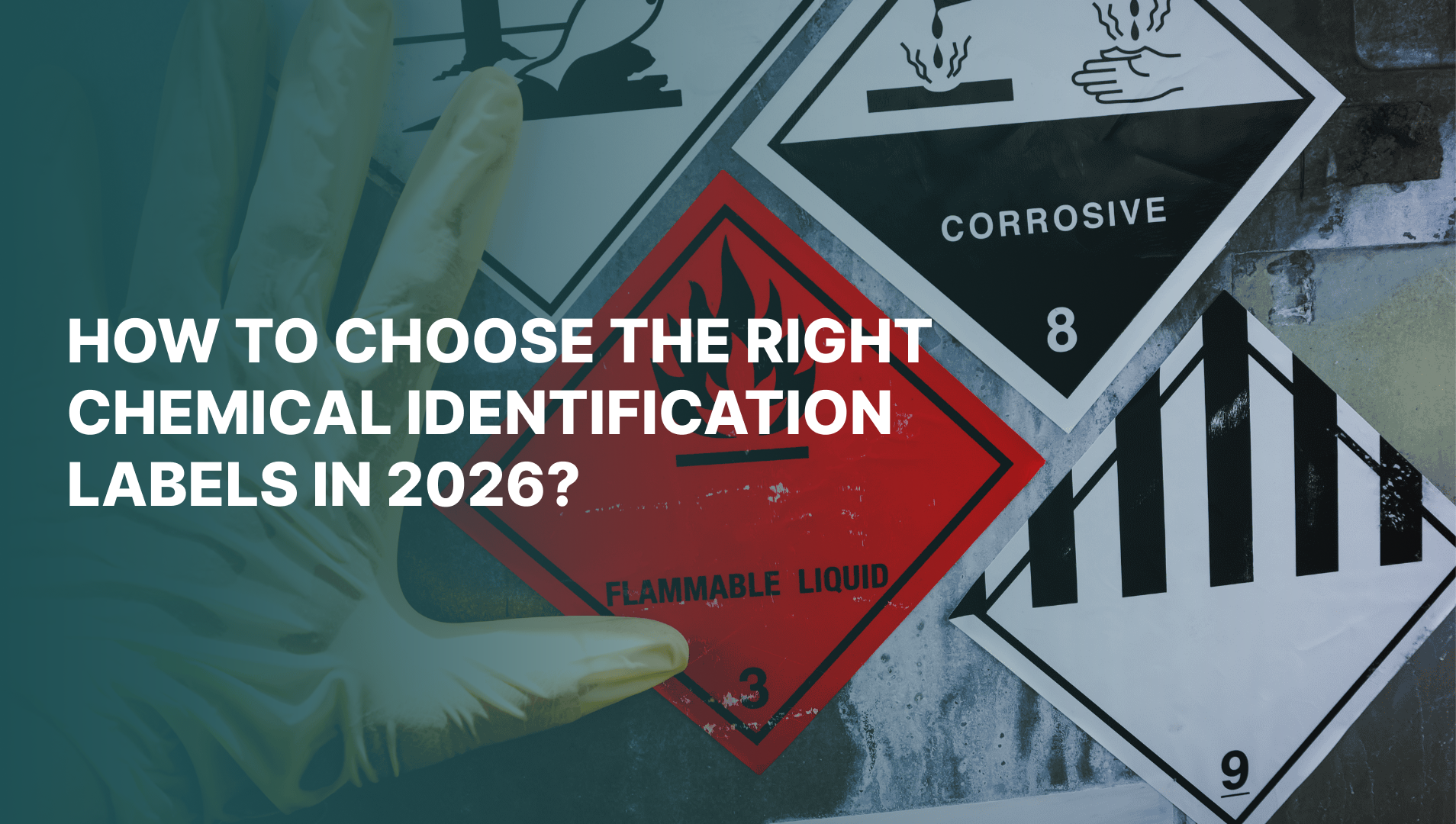
Chemical identification labels are used to clearly identify hazardous and non-hazardous chemicals within industrial, laboratory, and storage environments. Their primary function is to communicate chemical identity and safety information so materials can be handled, stored, and transported correctly.
These labels are commonly applied on containers, drums, tanks, pipelines, and secondary packaging, ensuring chemicals can be quickly recognized during routine operations or emergency situations. Clear identification reduces the risk of accidental exposure, incorrect handling, and cross-contamination.
Chemical identification labels are used to:
Identify the chemical substance or mixture
Indicate potential hazards and safety risks
Support safe handling, storage, and disposal
Maintain traceability within facilities
Common labeling scenarios include:
Primary containers: Original manufacturer packaging such as drums, cans, or IBCs.
Secondary containers: Transfer bottles, temporary vessels, or in-process containers.
Workplace labeling: Used within manufacturing plants, laboratories, and storage areas.
Transport labeling: Applied during movement and logistics for identification in transit.
Even chemicals manufactured or used exclusively in-house must be labeled to ensure consistent identification, support safety procedures, and meet workplace compliance requirements.
What Information Must Appear on Chemical Identification Labels
Chemical identification labels must present clear, standardized information that allows users to quickly understand the nature of the substance and the risks associated with it.
While specific regulatory requirements may vary by region, the core elements of chemical labeling remain consistent across industrial environments.
Key information typically included on chemical identification labels includes:
Product identifier: A unique name or code used to clearly distinguish the chemical from others in the workplace.
Chemical name: The recognized chemical or mixture name to ensure accurate identification during handling and storage.
Hazard classification: The category of hazard associated with the substance, such as flammability, toxicity, corrosivity, or reactivity.
Signal words: Terms such as Danger or Warning used to indicate the severity level of the hazard.
Hazard statements: Short descriptions explaining the nature of the risk, including potential health, physical, or environmental effects.
Precautionary statements: Guidance on safe handling, storage, protective equipment, and emergency response measures.
Supplier or manufacturer information: Details that identify the responsible manufacturer, distributor, or supplier for traceability and support.
Batch or traceability references (where applicable): Lot numbers, batch codes, or internal reference data used for inventory control and incident investigation.
Presenting this information in a clear, legible format ensures chemical identification labels support safety awareness, regulatory compliance, and effective communication throughout the chemical lifecycle.
Global Chemical Labeling Standards and Regulations in 2026
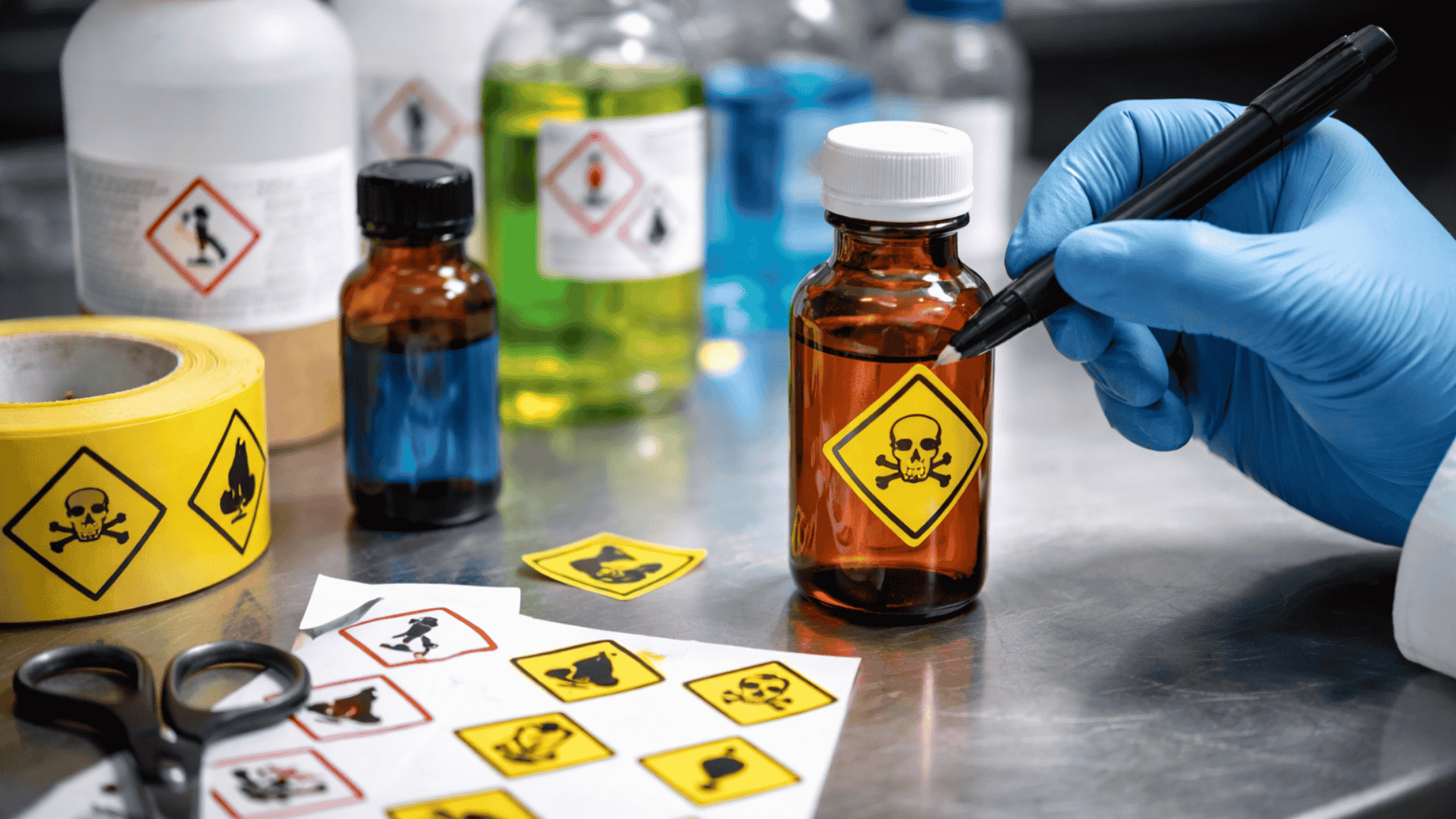
Chemical identification labels are governed by internationally recognised systems designed to promote consistent hazard communication across countries and industries.
These frameworks ensure that hazardous chemicals are labelled in a way that can be understood by workers, logistics operators, regulators, and emergency responders.
1. Globally Harmonized System (GHS)
The Globally Harmonized System of Classification and Labelling of Chemicals (GHS) is an international framework developed by the United Nations to unify how chemical hazards are classified and communicated worldwide.
It specifies hazard criteria and standardised label components such as pictograms, signal words, hazard statements, and precautionary statements to ensure clear communication regardless of language or geography.
2. US OSHA Hazard Communication Standard (HCS)
In the United States, OSHA’s Hazard Communication Standard (29 CFR 1910.1200) incorporates the GHS criteria to require consistent hazard classification and labelling.
Under this standard, manufacturers and importers must provide labels with harmonised signal words, hazard pictograms, hazard statements, and precautionary information to downstream users and workers.
Employers are also required to train workers to understand these labels as part of a broader hazard communication program.
3. EU CLP Regulation
The Classification, Labelling and Packaging (CLP) Regulation (EC) No 1272/2008 implements the GHS within the European Union. It requires companies to classify, label, and package chemicals before placing them on the EU market, using standard pictograms and hazard information.
The CLP framework helps ensure that hazard information is consistent and recognisable for workers and consumers throughout the EU.
4. Importance of Consistent Labeling Across Geographies
Consistent chemical labelling across regions matters because chemicals often move through global supply chains.
A harmonised approach reduces the risk of misinterpretation that can lead to handling errors, safety incidents, or non-compliance during cross-border transport.
By following GHS and region-specific implementations such as OSHA HCS and EU CLP, businesses ensure that labels communicate hazards clearly to international audiences and comply with both workplace safety and regulatory expectations.
How Chemical Identification Labels Work in Practice
Chemical identification labels are designed to communicate critical safety information quickly and clearly during everyday operations.
Their effectiveness lies in how information is presented visually and how easily it can be interpreted in real working conditions.
Key ways chemical identification labels function include:
Visual hazard communication: Standardized pictograms, signal words, and symbols allow workers to recognize chemical hazards at a glance, even before reading detailed text.
Immediate identification during spills or emergencies: In the event of leaks or accidental releases, labels help emergency teams quickly identify the substance involved and initiate the correct response procedures.
Worker training alignment: Label elements are consistent with safety training programs, reinforcing hazard awareness and helping employees recognize risks during routine handling.
Label readability from distance: Clear fonts, contrast, and symbol design ensure chemicals can be identified on shelves, pallets, or storage tanks without close inspection.
Integration with safety data sheets (SDS): Information displayed on labels corresponds directly with SDS documentation, allowing users to confirm handling, storage, and emergency instructions when required.
Together, these features enable chemical identification labels to function as an essential communication link between regulatory requirements, safety procedures, and real-world workplace operations.
Common Challenges in Chemical Identification Labeling
Chemical identification labels are often exposed to harsh conditions that go far beyond standard packaging environments.
Many labeling failures occur not due to process gaps, but because the label material, adhesive, or printing method is not suited to the operating conditions.
Common challenges encountered in industrial environments include:
Labels dissolving due to solvent exposure: Frequent contact with chemicals, vapors, or spills can degrade label films that are not designed for chemical resistance.
Ink fading from chemical splashes: Standard inks may break down when exposed to acids, solvents, or cleaning agents, reducing legibility of hazard information.
Adhesive failure on drums and IBCs: Curved surfaces, textured plastic, and residue from previous labels can prevent proper bonding if the adhesive is not compatible.
Labels peeling in outdoor yards: Sunlight, moisture, temperature fluctuations, and dust accelerate adhesive breakdown and material deterioration.
Poor legibility over time: Heat, abrasion, and repeated handling can cause text and symbols to fade, increasing the risk of misidentification.
Manual relabeling errors: Repeated replacement of failed labels increases the likelihood of incorrect placement, missing data, or inconsistent information.
These challenges highlight the importance of selecting label materials, adhesives, and printing methods based on real environmental exposure rather than generic labeling specifications.
Especially in chemical environments where solvents, heat, and handling impact label life, standardized solutions often fall short. This is where Gannayak Packaging works with industrial teams to align label materials, adhesives, and print durability with real operating conditions.
Label Materials, Adhesives, and Printing Methods
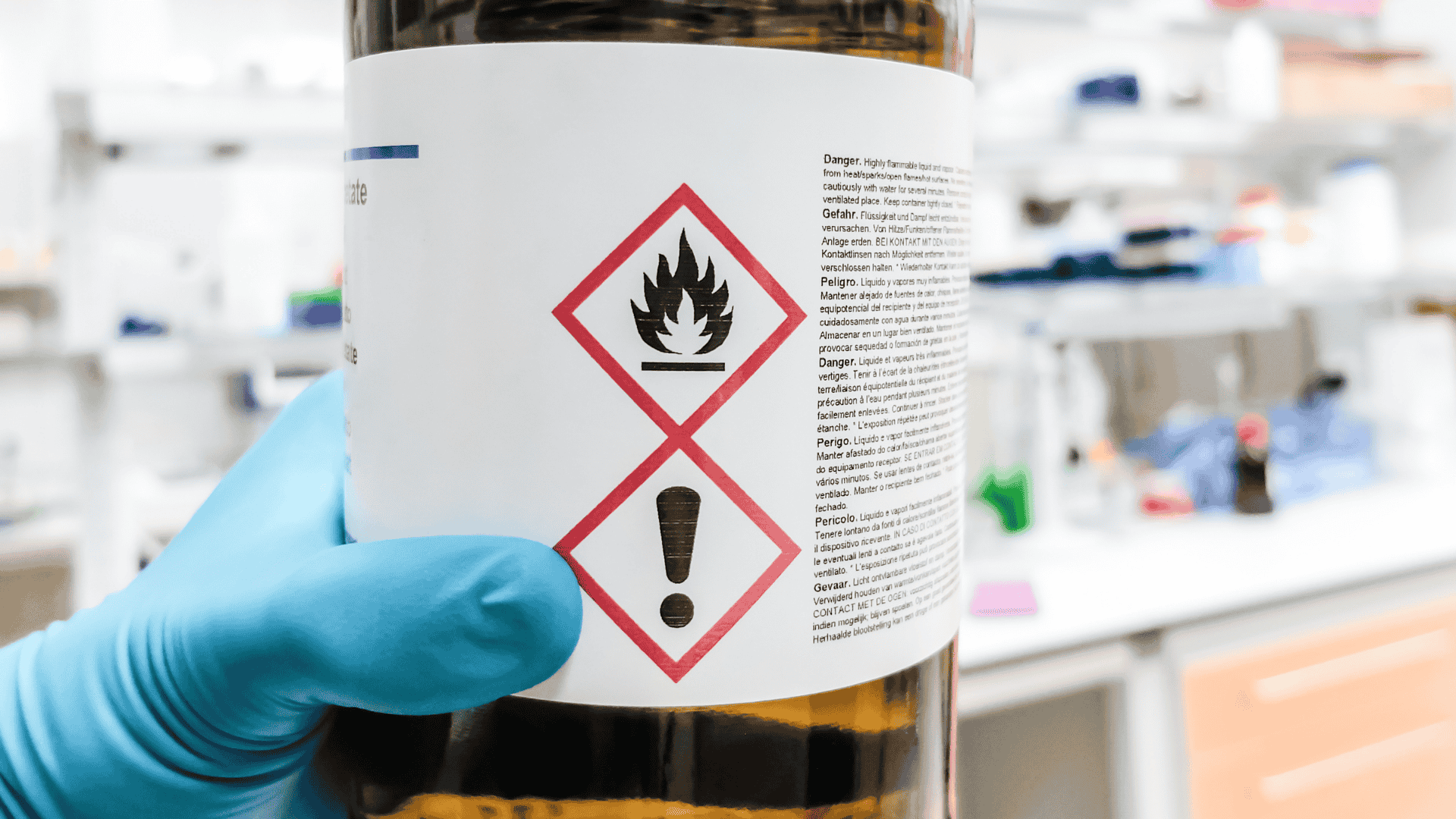
Effective chemical identification labeling depends on how well the label material, adhesive, and printing method perform together.
Failure in any one of these areas can compromise readability, adhesion, and overall safety compliance.
Label Materials Used for Chemical Identification in 2026
Different label materials are selected based on the level of chemical exposure, environmental conditions, and required service life.
Polyester labels: Offer high resistance to chemicals and moisture with good temperature tolerance. Commonly used on chemical drums, containers, and industrial storage areas where long-term durability is required.
Polypropylene labels: Provide moderate chemical resistance and good moisture protection. Suitable for indoor chemical storage or environments with limited exposure.
Vinyl labels: Highly flexible with strong resistance to moisture and many chemicals. Often used on curved containers or outdoor storage where temperature variation is common.
Polyimide labels: Designed for extreme conditions, offering exceptional chemical resistance and high-temperature performance. Typically used in harsh processing environments or where long-term identification is critical.
Selecting the correct material ensures labels remain intact and legible despite routine handling and exposure.
Adhesive and Surface Compatibility Considerations
Adhesive performance determines whether a chemical identification label stays securely attached throughout its lifecycle. Even the most durable material can fail if the adhesive is not matched to the surface or environment.
Permanent acrylic adhesives provide strong long-term bonding and are widely used for standard chemical containers.
Chemical-resistant adhesives are formulated to withstand exposure to solvents, oils, and cleaning agents without degradation.
Metal and plastic drum surfaces may include coatings or residues that affect adhesion and require compatible adhesive systems.
Curved containers reduce surface contact and demand flexible adhesives to prevent edge lifting.
Rough or textured surfaces need higher-tack adhesives capable of conforming to uneven finishes.
Cold storage conditions can reduce adhesive tack, making low-temperature-rated formulations essential.
Correct adhesive selection is critical to preventing peeling, lifting, or premature label loss.
Printing Methods for Chemical Identification Labels
Print quality plays a major role in maintaining safety information visibility over time. Poor print durability can render hazard symbols unreadable even when the label material remains intact.
Thermal transfer printing is widely used for chemical labels due to its stability and resistance to environmental stress.
Resin ribbons create a strong bond between ink and label surface, providing excellent resistance to smudging and abrasion.
High chemical exposure resistance ensures printed text and pictograms remain legible after splashes or cleaning.
Long-term readability supports continued compliance by preserving hazard warnings throughout the label’s service life.
When materials, adhesives, and printing methods are correctly aligned, chemical identification labels deliver consistent performance, reduced relabeling, and improved workplace safety.
Industrial Applications of Chemical Identification Labels
Chemical identification labels play a critical role across industries where hazardous substances are manufactured, stored, or transported.
Each sector presents unique exposure conditions and regulatory expectations, requiring labels that remain legible and securely bonded throughout the chemical handling process.
Below is an overview of how chemical identification labels are applied across major industrial environments:
Chemical Manufacturing Plants
In chemical manufacturing facilities, identification labels are used on raw material containers, intermediate vessels, reaction tanks, and finished product drums. Labels support material segregation, process safety, and traceability throughout production.
Due to frequent exposure to solvents, vapors, and temperature fluctuations, labels in these environments must offer strong chemical resistance and long-term adhesion.
Laboratories and Research Facilities
Laboratories rely on chemical identification labels to clearly mark reagents, test samples, and temporary containers. Accurate labeling reduces the risk of misidentification and cross-contamination while supporting standardized safety protocols.
Labels must remain legible despite frequent handling, cleaning, and exposure to small-volume chemical spills.
Warehouses and Storage Areas
In chemical storage facilities, labels enable fast recognition of stored substances and associated hazards.
They support proper storage segregation, inventory control, and emergency response planning. Durability is essential, as labels are often exposed to dust, moisture, stacking abrasion, and long-term static storage conditions.
Pharmaceutical Production
Within pharmaceutical manufacturing, chemical identification labels are applied to active ingredients, solvents, intermediates, and process containers. These labels support batch traceability, quality documentation, and compliance audits.
Materials used must withstand cleaning agents and controlled-environment conditions without compromising readability.
Oil and Gas Operations
Oil and gas environments require chemical identification labels that can tolerate harsh outdoor exposure, including ultraviolet radiation, heat, moisture, and corrosive substances.
Labels are used on chemical drums, pipelines, and storage systems to ensure accurate identification during handling, maintenance, and transport.
Transportation and Logistics
During transportation, chemical labels ensure substances remain identifiable throughout the supply chain. Clear labeling supports safe loading, unloading, and emergency response in transit.
Labels used in logistics must remain intact despite vibration, handling, weather exposure, and extended transit durations.
These industry-specific applications highlight the importance of selecting chemical identification labels designed for the operational environment, ensuring safety, compliance, and traceability across the entire chemical lifecycle.
How to Choose the Right Chemical Identification Label
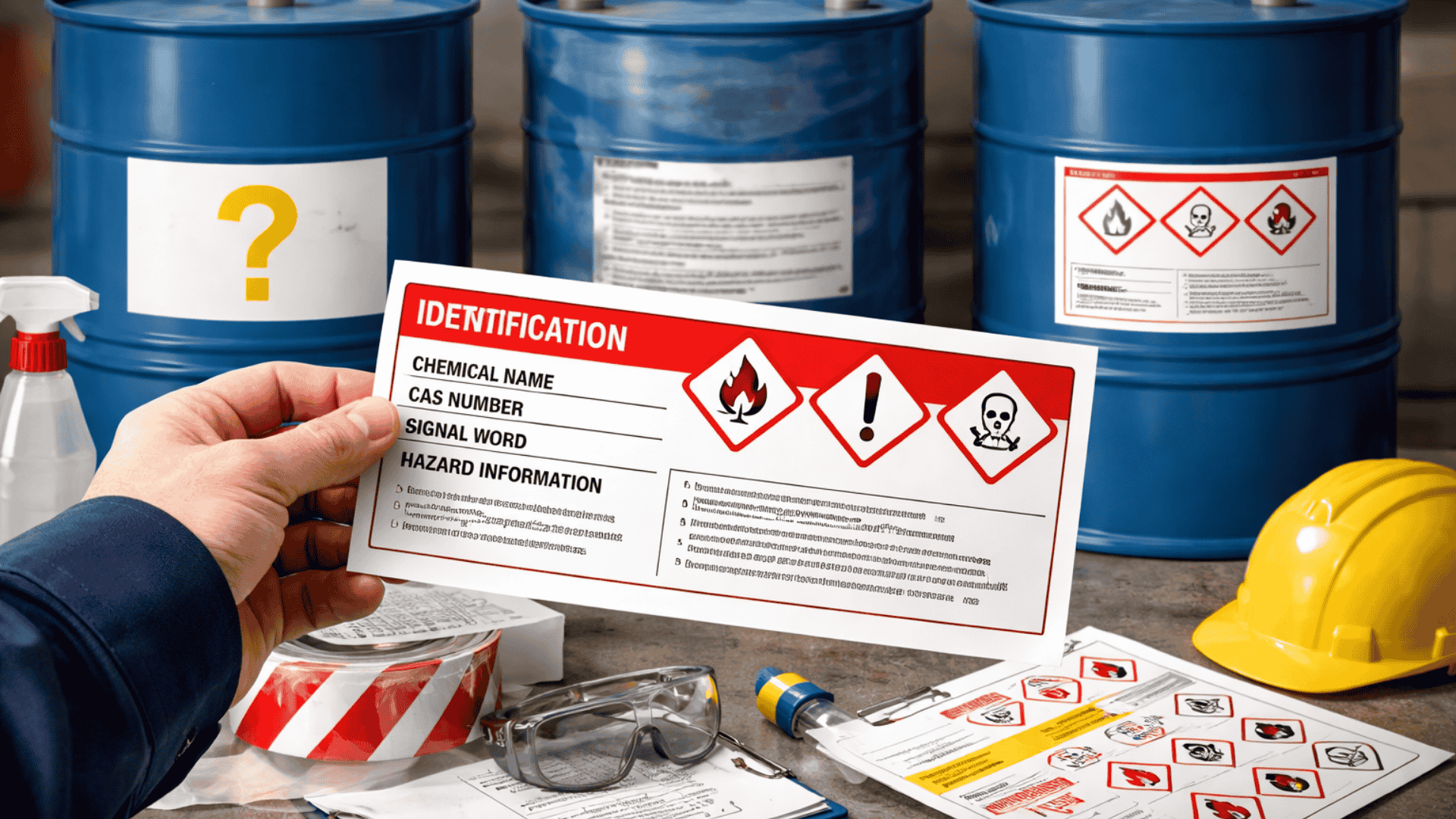
Selecting chemical identification labels requires more than matching the correct hazard information to a container. The label must perform reliably under real operating conditions while maintaining compliance, readability, and adhesion throughout its intended lifespan.
A thorough evaluation should consider the full environment in which the chemical is stored, handled, and transported.
Key factors to assess include:
Chemical exposure type
Determine whether labels will be exposed to solvents, acids, oils, vapors, or routine washdowns, as different chemicals can degrade materials and inks at varying rates.Indoor vs outdoor storage
Outdoor storage introduces ultraviolet exposure, moisture, dust, and temperature fluctuations that significantly affect label longevity.Container surface material
Adhesion varies across metal drums, plastic barrels, coated containers, and intermediate bulk containers, making surface compatibility essential.Temperature range
Both storage and operating temperatures influence adhesive performance and material stability, particularly in hot processing areas or cold storage.Expected label life
Labels intended to remain readable for extended periods require higher-durability materials than those used for short-term identification.Compliance requirements
Label construction must support applicable safety regulations and maintain legibility throughout inspections and audits.Print method compatibility
The chosen material must be compatible with printing technology and ribbon type to prevent fading or smudging of critical information.Replacement frequency
Frequent relabeling often indicates an underlying mismatch between material, adhesive, and environmental conditions.
Evaluating these factors together allows businesses to reduce label failures, improve safety communication, and maintain consistent chemical identification across operations.
Gannayak Packaging supports chemical labeling requirements through application-based material guidance, durable print compatibility, and consistent bulk manufacturing designed for industrial environments.
How Gannayak Packaging Meets Chemical Labeling Requirements

Gannayak Packaging provides labeling solutions designed to support chemical identification, safety communication, and long-term durability in industrial environments.
Its chemical labeling capabilities are aligned with the performance challenges commonly faced in manufacturing, storage, and transport operations.
For chemical identification applications, Gannayak offers:
Chemical-resistant label materials suitable for exposure to solvents, oils, moisture, and routine washdowns.
Durable printed chemical labels designed to maintain legibility of hazard symbols, text, and identifiers over extended storage periods.
Adhesive options compatible with drums, barrels, IBCs, and coated containers, supporting reliable bonding on metal and plastic surfaces.
Thermal transfer printable labels engineered for use with resin ribbons to improve resistance to smudging, abrasion, and chemical contact.
Beyond chemical identification, Gannayak Packaging supports integrated labeling and packaging requirements through additional services, including:
Barcode labels for batch identification, traceability, and inventory control.
High-security and tamper-evident labels to protect chemical products from unauthorized access or interference.
Thermal transfer ribbons in wax, wax-resin, and resin grades to match durability requirements.
Custom printed labels for industrial, pharmaceutical, and export-oriented packaging.
Recycled plastic packaging materials, supporting sustainability initiatives across chemical and manufacturing supply chains.
By combining chemical-grade label materials, compatible print systems, and scalable manufacturing, Gannayak Packaging enables businesses to manage chemical labeling, compliance, and traceability requirements under a single, consistent supply framework.
Conclusion
Chemical identification labels are most effective when selected based on chemical exposure, container surface, and operating environment rather than specification alone. The correct combination of label material, adhesive system, and printing method directly impacts readability, compliance reliability, and long-term safety performance.
Consistency across bulk production is equally critical, ensuring labels remain uniform and legible throughout storage, handling, and transport.
Gannayak Packaging supports these requirements through chemical-resistant label materials, durable thermal transfer printing compatibility, barcode-enabled identification, and scalable manufacturing solutions designed for industrial chemical environments.
Speak with Gannayak Packaging to discuss your chemical labeling requirements.
Frequently Asked Questions (FAQs)
1. Can chemical identification labels be supplied with variable data printing?
Yes. Labels can include variable information such as batch numbers, container IDs, barcodes, or sequential codes. Manufacturers like Gannayak Packaging support variable-data printing to maintain traceability across large chemical inventories.
2. How are chemical labels tested before bulk deployment?
Performance testing typically includes adhesion checks, chemical exposure simulation, abrasion resistance, and print durability evaluation. Working with suppliers that support application-based testing helps reduce labeling failures after deployment.
3. Are chemical identification labels suitable for relabeling reused containers?
Yes, provided the surface is properly prepared and compatible adhesives are used. Suppliers experienced in industrial labeling can recommend materials designed to bond reliably on cleaned or previously labeled drums.
4. Can chemical labels support digital tracking systems?
Chemical identification labels can be integrated with barcodes or QR codes to support inventory management, batch tracking, and audit documentation across manufacturing and storage environments.
5. Why is supplier consolidation important for chemical labeling programs?
Using a single supplier for labels, ribbons, and compatible materials improves consistency, reduces print compatibility issues, and simplifies procurement. Gannayak Packaging offers an integrated labeling ecosystem that supports long-term chemical identification requirements.